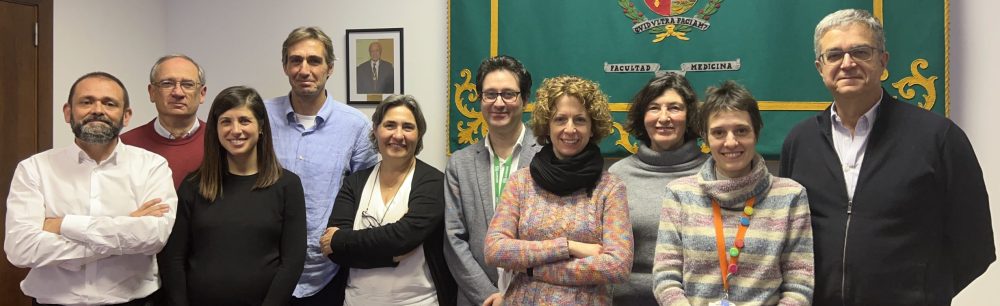
The group “Colon cancer: organoids, microenvironment and vitamin D” (VitDColon) is a research group recognized by the Universidad Autónoma de Madrid (UAM) and by the Consejo Superior de Investigaciones Científicas (CSIC). It has a consolidated trajectory for more than twenty years in the study of colon cancer. He has worked mainly with established human colon carcinoma cell lines and animal models, making seminal contributions in the field of signaling by Wnt factors and characterizing the antitumor effects of vitamin D in this disease. During this period, he has led European, national and regional projects and collaboration contracts with companies. In addition, he is a member of the Cancer CIBER and the Cancer Connection of the CSIC and is integrated in the group “Mechanisms of tumor progression” of the Research Institute of the University Hospital La Paz (IdiPAZ). The group also has extensive training experience, having supervised 21 doctoral theses.
In recent years, the group has focused on two novel lines of research:
- The effects of vitamin D on the tumor microenvironment whose major cellular component are fibroblasts
- The effects of vitamin D on gene expression, proliferation and cell phenotype in colonic organoids, which better reproduce the in vivo situation than traditional cultures of immortalized lines.
Both cell systems are established from biopsies of tumor and adjacent normal tissue from colon cancer patients undergoing surgery or colonoscopy (in collaboration with surgeons, oncologists, endoscopists and pathologists at Hospital Universitario La Paz). Although both systems are complex and laborious, the group has managed to generate one of the largest organoid biobanks in Spain. Similarly, an important fibroblast culture bank has been generated.
The specific objectives of the group are:
- To analyze the actions of vitamin D on tumor microenvironment fibroblasts and their relationship with carcinoma cells and other tumor stromal cell types,
- To identify and study Wnt and vitamin D target genes in stromal fibroblasts and colonic organoids,
- To investigate the effect of vitamin D on cell phenotype, differentiation status and the Wnt signaling pathway in normal and tumor colonic organoids, and
- To study the response of organoids to drugs currently used in clinical practice and others in development, and their possible modulation by vitamin D.
The group collaborates with other cancer experts in order to establish synergies in mechanisms, processes and techniques, and thus contribute to the advancement of ongoing research. It brings its extensive experience in the establishment of new generation cellular models (organoids and primary cultures of cancer-associated fibroblasts obtained from patient samples) and in the Wnt/beta-catenin signaling pathway, crucial in colon cancer and other neoplasms.