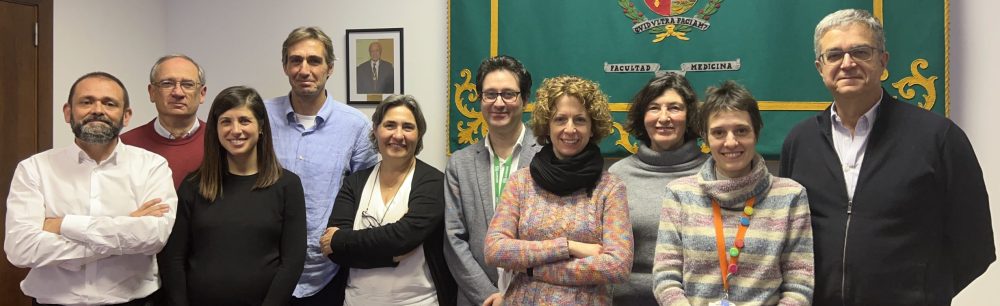
PRECICOLON-CM is composed of groups from diverse disciplines within biomedicine and brings a set of complementary technologies, The multidisciplinary composition of the consortium,covers all stages of the Translational Research process, brings great added value to the mere sum of each member, and represents a unique opportunity to lead the field of Colon Cancer (CC).
PRECICOLON-CM consortium aims to take advantage of the experience and resources of the groups that form part of the consortium and of the business partners to undertake a joint and cohesive project that includes tasks that, individually, the groups would not be able to manage. The creation of the consortium will result in greater synergy and facilitate the achievement of a greater scientific-technological impact of the results obtained.
Each of the groups in the consortium offers unique scientific and technical capabilities that will be made available to the other groups. This will have an impact not only on the achievement of the scientific objectives of the project, but also on the training aspects.
The VitDColon group offers the consortium its experience in obtaining, culturing and handling organoids and stromal fibroblasts derived from patients with CC and access to its biobank samples. The CIB-CSIC group brings its experience with murine models of metastasis and proteomic techniques. The AP group is an expert in pathological anatomy and offers the consortium its extensive collections of tumour samples from patients with clinical follow-up. The RaMiColon group provides expertise in microbiota and microbiology techniques, as well as imaging and radiomic techniques. Finally, the DiabeColon group contributes with its knowledge of Diabetes-Obesity-CC interactions and its experience in co-culture of tumour cells with adipose tissue explants.
The excellent combination of groups from different academic fields together with clinical groups will facilitate the identification of problems of greater translational relevance and the development of broader approaches, with more integrative strategies, resulting in a greater impact on patient welfare. On the other hand, the inclusion of companies from the sector in the consortium will not only facilitate technology transfer processes, but will also contribute to better management in decision-making and in the results transfer plan.
The interaction of the groups in the consortium will give rise to synergies that will allow us to address more ambitious objectives for the development and application of precision medicine in CC, which will place the consortium in a strategic position for the future, with greater capacity to influence, access competitive funds and, in short, contribute with relevant advances to the diagnosis and treatment of CC, thus improving and optimising the capacities of the National Health System.
Three of the five groups in the consortium (VitDColon, CIB-CSIC and AP) were part of previous consortia and have a relevant track record of collaboration in the framework of the 2006 and 2010 Biomedicine calls of the Community of Madrid that was partially interrupted as they did not obtain funding in the 2017 call. However, the groups have continued to maintain close collaborations as evidenced by the number of joint publications and the consortium has been strengthened with two new groups (RaMiColon and DiabeColon) that provide expertise in two fields with great influence in CC, intestinal microbiota and diabetes, and in cutting-edge techniques of great applicability in clinical practice such as radiomics. We believe that obtaining the grant in this call will consolidate the potential of the consortium and establish it as a reference group in CC research in the Community of Madrid and Spain, positioning it adequately for competitive European calls for proposals.