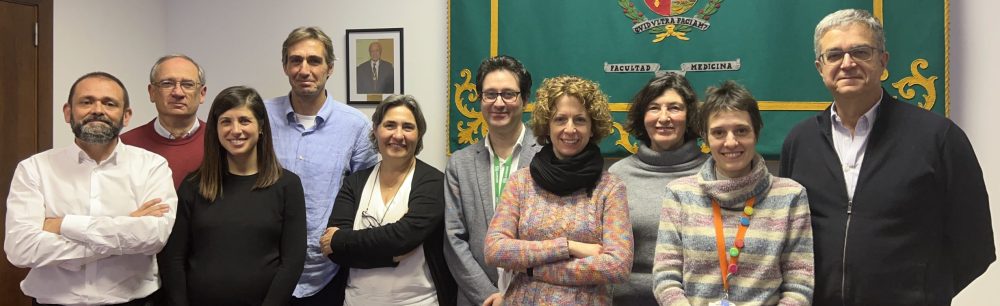
The group “DIABECANCER MOLECULAR” (DiabeColon) is recognized by the Universidad Rey Juan Carlos de Madrid as a high performance research group in the molecular basis of the association of diabetes with cancers. It has a consolidated trajectory through competitive funding at national and regional level of fifteen years. His work directly impacts and links two of the most prevalent diseases in our Society: diabetes and colon cancer. His results have contributed to a paradigm shift in studying tumor signaling in vitro, given the glucose content of the usual culture media and the effects of glucose on tumor signaling. The importance of their contributions to the study of the molecular mechanisms linking diabetes and colon cancer is supported by the impact of their regular publications in decile 1 journals.
The group works with cultures of established human colon carcinoma cell lines, two diabetic mouse models and human samples. It has established regional, national and international collaborations reflected in its publications. Locally, it collaborates with surgeons, oncologists and pathologists from 5 hospitals in the Community of Madrid (Hospital Fundación Alcorcón, Universitario Rey Juan Carlos, Clínico San Carlos, Puerta de Hierro Majadahonda and Fundación Jiménez-Diaz). These collaborations make the translational nature of the research possible by providing, in addition to their skills, an important collection of samples.
Diabecolon group has extensive national and international training experience by teaching undergraduate (Medicine, Pharmacy and others) and international Masters since 2014. It has supervised 4 PhD theses and 7 TFGs/TFMs related to tumor signaling and numerous trainees.
Diabecolon group has focused on studying the molecular mechanisms by which hyperglycemia favors the development of colon cancer (and melanoma) in diabetic patients. In recent years it is opening its research to:
- The effects of other metabolic features of diabetes such as hyperlipidemia and vitamin D deficiency on tumor signaling by Wnt/β-catenin in colon cancer.
- The contribution of immune alterations in diabetes to colon cancer.
The role played by adipose tissue and proposed to be studied in this project perfectly fits and complements these lines of research given its importance in the establishment of diabetic hyperlipidemia and its contribution to the inflammatory state that promotes most of the hallmarks of cancer.
Diabecolon brings to the consortium the integrative physiological view of obesity and diabetes as contributors to an axis leading to colon cancer, the in-depth knowledge of the mechanisms altered in these diseases and its experience in identifying molecular mechanisms in vitro, in addition to its models and sample collections.