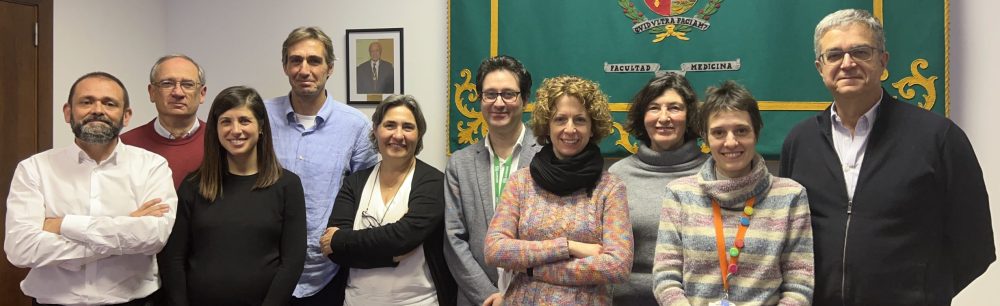
The group “Colon cancer: radiomics, microbiota and tumor microenvironment” (RaMiColon), is a research group at the “Instituto Ramón y Cajal de Investigación Sanitaria”. Its members have been studying colon cancer for more than twenty years with lines of research characterized by an enormous translational potential using tissue, peripheral blood, stool and saliva samples from patients with colon cancer at our center. Our main contributions are focused on the study of fibroblasts, a major component of the tumor microenvironment, and their role in the progression of colon cancer, also identifying possible biomarkers associated with them with diagnostic, prognostic and predictive value. During this period, the group has led national and regional competitive projects. In addition, it is part of the CIBER consortium (CIBERINFEC and CIBERONC). The group also has extensive training experience, supervising different doctoral theses, final degree/master’s theses and as associate professors of the Alfonso X El Sabio University and honorary professors of the Department of Microbiology and Parasitology of the Complutense University of Madrid.
In recent years RaMiColon group incorporated new lines of research to implement new clinical tools to improve the quality of life and survival of our patients. Thus, we focus on:
- Identifying biomarkers derived from the tumor microenvironment associated with diagnosis, prognosis and response to treatment in liquid biopsy.
- Evaluating new biomarkers associated with imaging and radiomics.
- Defining the composition and functionality of the intestinal microbiota, trying to predict its contribution to cancer relapses after surgery.
The identification of biomarkers has as a basis for study the establishment of primary cultures of fibroblasts of normal and tumor colon mucosa from patients who underwent surgery at HURYC, currently having an important collection of these samples collected in previous studies. For the development of the second point it is important to highlight the use of standard care tools and computed tomography tests for the development of new research models. Regarding the third line of research, once again the use of clinical samples indicates the translational potential of our lines of research.